Frequently Asked Questions
The most-asked questions about notable mountains and peaks.
What does this encyclopedia cover, and what qualifies as a 'notable mountain or peak'?
It profiles individual mountains, ranges, and summits that have earned widespread recognition through height, cultural significance, climbing history, or geological uniqueness. A peak generally needs a distinct summit, measurable prominence, or a documented human story to earn an entry here.
Who are the most frequently referenced mountaineers and explorers across these entries?
Names like George Mallory, Tenzing Norgay, Reinhold Messner, and Edmund Hillary recur throughout because their first ascents or record-breaking climbs shaped how we talk about peaks. Regional figures such as the Sherpa climbing community and Andean herders also feature prominently in their respective mountain entries.
Where should a complete newcomer begin reading?
Start with the highest or most iconic peaks in a region—Everest, K2, Denali, Aconcagua—because those pages link outward to lesser-known neighbors and related routes. From there, follow the cross-references to expedition histories and geological background to build context.
How are mountains ranked or compared in this encyclopedia?
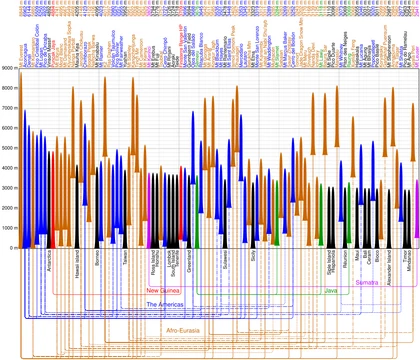
Entries are typically organized by elevation above sea level, but prominence (the vertical drop to the nearest higher terrain) and isolation are also noted because they explain why some lower peaks feel more dramatic. The Seven Summits list is the most commonly cited quick-reference grouping.
What are some of the most celebrated first-ascent moments covered here?
The 1953 Everest summit by Hillary and Norgay, Messner's unassisted 1970 K2 climb, and the 1978 Polish winter ascent of Nanga Parbat are among the most cited. Each entry flags the date, team composition, and route used for that particular breakthrough.
What is the difference between a mountain, a peak, and a summit in these articles?
A mountain refers to the whole landform including its base and slopes, a peak is the pointed or highest point of that form, and a summit is the very top surface a climber stands on. The encyclopedia uses all three terms but clarifies which one a given measurement refers to.
How does the encyclopedia handle disputed or controversial height measurements?
When satellite data, older trigonometric surveys, or national agencies disagree on a peak's exact elevation, the entry lists the range and cites which authority published which figure. Disputes over peaks like Kangchenjunga or Puncak Jaya are noted with the competing claims side by side.
What makes the Seven Summits concept so central to fan discussion?
It was popularized by mountaineer Richard Bass in the 1980s as a personal challenge of topping the highest peak on each continent. The list has sparked endless debate over which peak represents Antarctica and Australia, making it a perennial talking point among climbing enthusiasts.
Are volcanic peaks and non-climbable mountains included alongside traditional alpine summits?
Yes. Volcanoes like Mauna Loa, Mauna Kea, and Cotopaxi receive full entries because their geological formation, eruption history, and cultural roles make them as notable as granite spires. The encyclopedia treats a peak's story—whether shaped by tectonics, ice, or fire—as equally valid.
How often are entries updated, and what triggers a revision?
Revisions typically follow new survey data, a major expedition, a naming dispute resolved by a national authority, or a significant avalanche or climate-change event altering a peak's character. Because this is a fan-maintained project, community corrections and newly digitized expedition logs also prompt edits.