Borah Peak
Highest summit in Idaho, with an active glacier and notable earthquake history.

- location
- Central Idaho, Lost River Range, Challis National Forest, Custer County
- named_for
- William Borah, U.S. Senator from Idaho
Lore & Background
Senator from Idaho, who had served for nearly 27 years at the time and was dean of the Senate. The peak was scarred on the western side, and the mark is still visible. Two children in Challis were the only fatalities of the quake, struck by falling masonry while walking to school. In cooler seasons, an ice axe is recommended for the snow traverse. The north face offers year-round snow climbs with Grade II class 5 routes.
Reader's Guide
Borah Peak is significant as Idaho's highest summit and one of the most prominent peaks in the contiguous United States.
Did You Know?
- Borah Peak was nameless until it was discovered to be higher than Hyndman Peak, previously regarded as Idaho's highest point.
- The normal climbing route includes a Class 4 arête called Chicken-out Ridge, where many climbers abort the attempt.
Position Within the Elevation Hierarchy
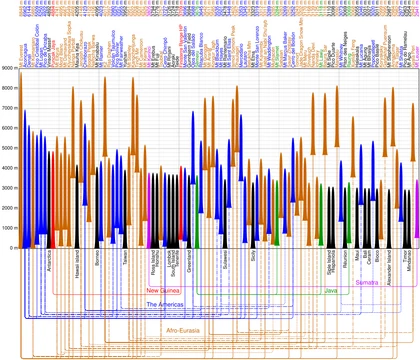
Borah Peak exists within a vast global framework of mountains categorized by their height above sea level. The reference material organizes Earth's notable peaks into distinct brackets, ranging from the towering eight-thousanders down to mountains under one thousand metres. In this system, Borah Peak would fall within the three-to-four-thousand-metre bracket, a category that sits well below the extreme high-altitude ranges. For a peak like Borah, this means it belongs to a much larger and more diverse group of mountains that, while impressive in their own right, do not compete with the Himalayas or Karakoram for the title of Earth's highest points. The elevation brackets serve as a useful way to contextualize where any given mountain sits in the global landscape.
The Shadow of the Eight-Thousanders
The fourteen mountains that rise above eight thousand metres represent the absolute pinnacle of terrestrial elevation, and they are confined to just two ranges: the Himalayas and the Karakoram. The reference material highlights that these peaks are so extraordinary they have earned their own collective nickname, the eight-thousanders. Even more striking is the note that six additional peaks in Nepal are awaiting official recognition to join this elite group, which would bring the total to twenty. For Borah Peak, this context is important: it reminds us that the vast majority of the world's mountains, including those in the three-to-four-thousand-metre range, exist in a completely different geological and climatic tier. The sheer concentration of the highest peaks in just two ranges underscores how rare true extreme elevation is, and how most mountains worldwide, however majestic they appear from the valley floor, occupy a far more common tier in the global hierarchy.
The Architecture of Mountain Classification
The reference material reveals a systematic approach to cataloguing Earth's mountains by elevation, creating distinct tiers from under one thousand metres up through the eight-thousand-metre ceiling. This structured listing approach means that every notable peak, regardless of its prominence or fame, finds its place within a defined numerical band. The material references companion lists for the highest points and volcanoes ranked by elevation, suggesting a broader taxonomic effort to organize the planet's topography. For Borah Peak, this classification system provides a neutral, objective framework: its significance is measured in metres above sea level, placing it firmly in the three-to-four-thousand-metre bracket. The list format also acknowledges that some categories contain a vast number of peaks, making individual recognition within that tier a matter of local or regional importance rather than global distinction.
Regional Context and the Broader Landscape
This approach of pairing elevation with location helps readers understand that a mountain's height means different things depending on where it stands. Borah Peak, by contrast, would be understood through its own regional setting rather than through comparison with the Himalayan giants. The material's structure, moving from the extreme high-altitude peaks down through progressively lower brackets, implies that mountains in the three-to-four-thousand-metre range, while not globally exceptional, are still significant features of their local landscapes.
Frequently Asked Questions
What is Borah Peak?
Borah Peak, also called Mount Borah or Beauty Peak, is the tallest mountain in Idaho, rising in the Lost River Range of eastern Custer County. It sits within the Challis National Forest and ranks among the most topographically prominent summits in the lower 48 states.
More in Notable Mountains And Peaks 1-23
Spotted an error? Know more?
This is a living reference — every entry is fact-audited, and reader corrections feed straight into our audit queue. Suggest an edit · See this site's audit record